Loading…

Loading…
Centre for doctoral training - sustainable development goals, CDT-SDG, is going to provide opportunities to people from very low-income groups, unorganized sectors and weak sections.
Opportunity lab established by the centre will identify the right individuals and provide an ecosystem for them to become small scale entrepreneurs. This will involve functioning as an incubator to train, skill and help in acquiring seed capital.
CDT-SDG in collaboration with GBS business school has made advancements in laying out problems that small businesses face in India. Their growth is often stunted due to lack of parallel infrastructure, market access, irregular regulations, lack of technological prowess and overall a lack of scientific methods of business management. Opportunity lab plans to be the world’s first solution aimed at solving these problems. The lab will be a social enterprise providing consultancy services to small businesses, providing them space to grow and access markets. Potentially the small scale businesses will join forcesto become large scale cooperative organizations, FPOs and OFPOs.
Why majority of FPOs andOFPOs fail and howwe willtransform that?
The majority of small businesses in India do not have established business practices of growth due to a lack of training and information. Unplanned integration into FPOs and OFPOs is nonfunctional and often ends up in the failure of businesses and organizations. Our goal at the SDG centre is to provide the structure process through which individuals' businesses establish ground over a period of two years, by providing business growth and consultancy services. This consultancy office will then transform into the main admin office of an FPO that will be established by joining the individual businesses of larger FPOs and OFPOs which will typically be as large as 100 individual businesses, thus seeing momentous growth in the farming sector of the region.
Goals
1. Selection and Skill development: The opportunity lab will identify interested possible candidates and sort them through the psychometric process and deliver them specific skill training free of cost.
2. Support system, nurturing and micro-funding: Lab will create an ecosystem wherein after skill development candidates may get support during their incubation time. We will nurture them for the next two years and also help them through micro-funding at the level of Lab and through Government agencies, CSR and crowdfunding.
3. Technology, Marketing and Business Growth Consultation: While working with the country’s foremost research institutions, business schools and social psychology departments, the lab aims at creating the right environment and resources for small businesses toflourish with help of calculated interventions.
Specifications
Initially, we will work into a few sectors like Agriculture, agro-based industries, animal husbandry, Hospitality, IT, etc. The opportunity lab will identify around ten trades in beginning and incubate one hundred in one trade as a pilot. By specifying the targeted sections, the lab will be able sustainably to create eco-systems for analogous small businesses.
Milestones
Cycle 1 The first cycle of the pilot project will involve 200 incubatee. Our research office will thus report the functioning models of success and feedback at the end of the first cycle, which will be implemented in the coming cycles. Cycle 2 After the first cycle of the pilot project; the next cycle will involve 1000 incubatee in the next trainee batch.
1. Phase 1 of 200 incubatee (6 months): In the first year, lab will seek at least 200 successful applications with help of NGOs and train them. By end of the phase, all 200 incumbents will start their small scale enterprise with help of the lab’s seed funding.
2. Fundraising through various possible sources. The centre will arrange for seed and later equity or loan based funding for the growth of small businesses.
3. Phase 2: Setting consultancy service to support the growth of 200 incubates (Support to be provided for 2 years).
4. Phase 3: Consultancy office converts into admin office for larger FPOs and OFPOs formed by combining around 200 smaller businesses. New incubates are added each year and go through the same process.
Revenue and Growth Model
Opportunity lab is aimed to be a social venture and we plan to develop it into a sustainable practice that can run its services without much outside help in the long run. The consultancy services provided for businesses growth to small businesses will either be equity-based impact investment in these businesses or charity based help. The seed money provided to small businesses will also be equity-based impact investment or charity based investments.
Pilot Project
Cycle 1
Total Cost per Incubatee - Training + Seed Funding for business + Incubation + Marketing support
Rs. 1.5 lac (one-third of the cost bear by SGVU at its training facilities)
Number of Incubatee in phase 1: 200
The total cost of Training in Phase 1: Rs. 3 Cr
Seeking external help: Rs. 2 Cr (SGVU will support with Rs 1 Cr)
Cycle 2
Number oftargeted successful businesses: 1000
The total cost of incubating 1000 businesses: Rs 15 Cr.
Intelligent business (Consultancy for small businesses):
Risks are inversely proportional to the information available when starting a business.
Our team believes in bringing together state of the art methods to the masses in order to improve their lives and create a fair economy. We are researching and implementing automated tools that would take entrepreneurs on a journeyto understand their neighborhood needs and business realities based on data and analytic methods. Our upcoming automated data analysis system would offer custom business insights in interactive maps to help our customers increase their chances of success by analyzing competitors’ location, population density and nearby points of interest using data science and mathematical methods.
By researching and developing automated systems to perform location/market analysis based on huge data sets, we can offer affordable and practical insights that the starting entrepreneurs can use in order to make better decisions (If they are going to start a business at home, they can decide which is the best business type. If they need to increase their sales, they can find specific population features to create focused marketing strategies. If they want to open a business, they can find the most convenient location for that particular business type). Our automated system helps us reduce costs and guarantee accurate results with the data, math and computer science behind. These insights (information) allow entrepreneurs to make informed decisions (intelligence) and increase their chances of success.
Starting entrepreneurs that are part of our project would have better chances of success so they might end up being a medium-size business, which could still acquire our products to expand their franchise. In addition, these stable businesses would hire more people and create a more distributed economy (opposite to large monopolies). A chain effect would make not only small and medium businesses succeed but create a supportive community for more entrepreneurship to come.
Our organization has the vision of empowering small businesses to improve local economies by offering them high tech tools, which were only accessible for largecorporations until today.
By providing business intelligence, we are:
1. Increasing sustainability overtime for small businesses so all starting entrepreneurs can focus on their actual work rather than competition and marketing strategies.
2. Promoting a homogeneous economic distribution by finding the local necessity of specific neighborhoods and giving that information to local entrepreneurs to address it.
3. Ensuring job stability within the business ecosystem because one business interacts with several others, creating a chain-reaction of work opportunities. Imagine a bakery that buys from the local daily products distributors and sells its bread to the local burger restaurant. We want to enable small and new businesses, especially in untapped communities, to prosper and create good jobs through access to capital, networks, and technology. Our team believes in bringing together state of the art methods to the masses in order to improve their lives and create a fair economy. We are researching and implementing automated tools that would take entrepreneurs in a journey to understand their neighborhood needs and business realities based on data and analytic methods.
Entrepreneurship Training Facilities at SGVU
DOIT, Rajasthan Govt. Incubation Hub
SGVU has established an incubation hub in association with DOIT, Rajasthan Govt. to support student and academic startups at the university. The hub has experience in helping business growth. Opportunity lab will take the help of the experience of the DoIT incubation hub in establishing growth opportunities for our incubatee.
DST Biotech Hub: Biotechnology Business Incubator
SGVU Biotechnology Business Incubator in Suresh Gyan Vihar University is a promising feat to foster innovation, research and entrepreneurial activities supported by Department of Science & Technology (DST), Govt. of Rajasthan. It was established in 2018 under the umbrella of Trust – SGVU – Ecosystem for Innovation & Entrepreneurship.
The biotechnology incubator aims to provide infrastructural facilities to start-ups and incubations to facilitate the development and commercialization of biotechnology-based products. The SGVU-BBI, is one of its kind in the country equipped with basic and advanced R&D set up. It’s a unique centre that contains multiple sectors of Biotechnology under one roof including agricultural fields, Plant Tissue Culture for the Agribiotech sector, Analytical laboratories for herbal and pharmaceutical biotechnology, Animal cell culture for oncology, immunology and knowledge-based service centres. The Biotechnology Business Incubator envisages to provide a platform for innovation in the field of Biopharmaceuticals, Herbal products, Oncology, Agrobiotechnology, Nanobiotechnology etc. The incubator is equipped with a state-of-the-art facility to substantiate the research & development of SGVU- BBI and it is working with innovative incubates in different sectors of agriculture including vermicomposting unit, plant tissue culture-based propagation, agribiotech clinic for customized solutions to farmers, to promote start-ups and entrepreneurship. The incubation centre provides opportunities to students enrolled in different programs of School of Applied Sciences, SGVU to attain hands-on training of sophisticated instruments via workshops and training modules.
COE in Training and Research in Automation with Bosch Rexroth
Suresh Gyan Vihar University has established the Centre of Excellence- Bosch Rexroth Automation Lab in collaboration with Bosch Rexroth, Germany who are market leaders in drives & control equipment and one of the largest automation solutions industries in the world. The primary objective of this centre is to prepare young engineering graduates to meet current industry demand for the global challenges in the manufacturing sector. The Centre has world class infrastructure with state-of-the-art technologies, equipment, training kits, hardware, software and teaching aids with excellent faculty trained by Rexroth Germany. This centre has one laboratory at par with international standards on Sensorics at the School of Engineering & Technology. SGVU and Bosch have collaborated to develop revolutionary courses in Mechanical & Electrical engineering. Labs and Theory subjects powered by BOSCH enhance the competency levels of the students for better employability. While our researchers have the opportunity to collaborate, our engineers get first-hand experience at one of the most advanced automation machines.
Agrieconomy Labs at SGVU
The Agriculture lab provides a wide range of testing programs for soils, water, plants, bio-solids, and other agricultural materials. The lab offers comprehensive analyses of soil, water, plant tissue, manure, compost, and other agricultural materials. Agricultural laboratories are considered the main component of secondary agricultural education, and are well suited to provide students with opportunities to develop problem–solving skills through experiential learning.
Soil & Water Conservation Lab
In the SWCS Lab, the students are exposed to the lab and field instruments. They
analyze the Physical and Chemical properties of soil, In-situ measurement of soil
moisture and density, Water quality testing, and Modelling Hydrological
systems.
Irrigation and Drainage Lab
The IDE Lab supports teaching, research, and demonstration in irrigation water management. It can be used for research on water balance studies, irrigation and drainage methods, flow measurement and analysis, water lifting devices etc. The laboratory is fully-equipped with soil moisture monitoring equipment.
Farm Machinery Lab
The FM Lab is one of the important laboratories, it mainly includes the machinery for soil preparations, seed plantation, inter-cultural operations, plant protection, harvesting, and threshing. The laboratory has tractor operated, power tiller operated, the self-propelled, stationary engine operated, animal operated, and manually operated equipment. The machinery is being used for practical classes as well as for research purposes.
Food Engineering Lab
FPE lab is well equipped with the facilities for conducting the lab experiments and for demonstration of different unit operations in agricultural processing, Lab experiments like physical and chemical analysis of different food and grain products, Pickles, and different kinds of food products by fruits and vegetable.
Dairy & Food Engineering Lab
DFE Lab is well equipped with machinery and measuring equipment related to milk processing. The major attraction of machinery in the laboratory is the Mini milk processing plant, Bottle Filling Machine, Freeze Dryer, Cream Separator.
Agroecosystem Living Lab
Current environmental, economic and sociological challenges to our agroecosystems are diverse and numerous, and can collectively degrade an agroecosystem’s health and reduce its ability to support desired plants and animals.
These challenges involve:
The direct degradation of soils, water, and other resources present or used in our agroecosystems; ‐ Whole climate dynamics, such as increasingly frequent extreme weather events and increased atmospheric carbon dioxide (CO2) which can impact agricultural yield and quality; social issues and economic factors arising from a trade or other market forces,as well as barriers to the adoption of practices and technologies by producers;and, a global need to provide growing populations with sufficient food, feed, fiber, and fuel. Traditional approaches to research need to be rethought. The magnitude of these challenges requires comprehensive approaches involving producers and other partners in the development of effective and economically viable practices and technologies. SGVU agricultural research institutes are considering applying the living laboratories approach to agriculture as a way to improve and protect agroecosystems. They envision that this approach can accelerate the adoption of new practices and technologies through the direct and explicit participation of all producers, scientists, and other interested partners in the performance of scientific activities in real-life experimental setups.
Transdisciplinary approaches involve farmers, scientists, and other interested partners in the co-design, monitoring, and evaluation of new and existing agricultural practices and technologies on working landscapes to improve their effectiveness and early adoption. This definition of ALL used by the working group builds on the core principles of a Living Laboratory and applies them to the specific context of agricultural research. The three components of the working group’s ALL definition form the basis of the analytical framework of this report (see Figure 1). An ideal ALL implements all three components concurrently to accelerate the adoption of agricultural practices and techniques. This integration is what distinguishes ALL from more traditional research formulations. To better understand the variety of current uses, ALL examples are analyzed against these three components:
Information and Technology Training
We aim to promote the economic independence of vulnerable youth through training in entrepreneurship, web development and intensive technology skills. We utilize our progressive LMS web application to engage students through video and written content across languages while making it accessible offline to include our low bandwidth users. Simultaneously, we engage experts from the local digital economy through volunteer programs and job integration opportunities to “bridge the digital divide” through inclusive dialogue and relationship building. Our entrepreneurs will learn the core skills to gain employment while also being guided into the role of an empathic global citizen through breakout training in topics like ethics, agri-business, health & wellness,and more.
Health Worker Training Lab
A community of SGVU engineers, scientists, health professionals, and entrepreneurs came together, working at start-up speed to come up with open and free technical solutions for the production of protective equipment. The Initiative focuses on research that uses sophisticated economic methods to study large micro-level datasets on consumer and producer behavior in health care markets. Some of the primary research topics include consumer behavior and market regulation in health insurance markets, physician performance in the context of different payment and technology mechanisms, consumer choices of health care services and providers, and equitable systems for national health care provision.
Hospitality Innovation
Hospitality Innovation Lab, designed to help drive innovation in travel, tourism, and hospitality as the industry recovers post-pandemic. We are on the lookout for dynamic and innovative start-ups that are transforming the travel, tourism & hospitality sector, and that seek support on their journey from a dynamic, experienced, and entrepreneurial team of senior industry professionals. At SGVU Hospitality we operate with an entrepreneurial spirit in everything we do, and we pride ourselves on our culture of innovation. As a team, we have been looking at ways to help drive innovation in travel, tourism, and hospitality, at a time our industry needs it the most. Through the Innovation Lab, we want to support and promote entrepreneurs that are changing the face of our industry and offer them a springboard to launch and grow their business by providing office space, business support and advisory, product testing facilities, and investment opportunities. We are looking to onboard the first start-ups in the Innovation Lab, with innovative products, solutions, and/or technologies in the fields of Artificial intelligence (AI), hotel guest & employee guest experience, sustainability & renewable energy, food & beverage, and/or community service(s) for the Innovation Lab. It will provide our communities with a greater understanding of the guest experience and the ways in which this technology can ultimately lead to greater staff empowerment. With the Hub and its new lab, we have a unique opportunity to push the boundaries on how we educate and prepare the innovators and entrepreneurs who will shape the future of an evolving hospitality market. We will be honored to be a part of this new SGVU initiative and look forward to helping to develop the next generation of the hospitality workforce. Technology can help unburden hospitality for guests, hoteliers, and hotel operators. Great hospitality thrives when hoteliers understand the relationship between technology and warm, engaging high-touch service. Our partnership with the Hub and Experiential Learning Lab provides the unique opportunity to influence, and learn from, employees, entrepreneurs, and investors, and to help shape the future of the hospitality industry.
Team & Values
The Opportunity Labs team includes diverse leaders with singular opportunity- focused operating experience: we have led state and local government agencies, built thriving non-profit organizations, launched and scaled start- ups, and managed projects at the highest levels of the federal government. We have deep experience in supporting business growth and opportunities.
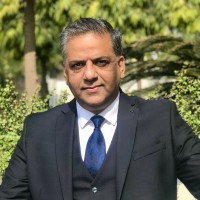
Dr. Sudhanshu,Chief Mentor, Suresh Gyan Vihar University
Dr. Sudhanshu, Chief Mentor, Suresh Gyan Vihar University, a Ph.D. holder from MNIT Jaipur, is an Indian educationist and polymath: geologist, writer, thinker, politician, photographer, environmentalist and also the Pioneer of the Suresh Gyan Vihar University Opportunity Lab.
He is an innovative thinker, motivator of the highest order and has been blessed with excellent administrative capabilities which have been pivotal in elevating Suresh Gyan Vihar University to an International level.
Dr. Sudhanshu is now channelling all his time, efforts and energies to the cause of social upliftment of the weaker sections of the society through Social Entrepreneurship through The Suresh Gyan Vihar Opportunity Lab.
Discover more about Dr. Sudhanshu on Wikipedia:
https://en.wikipedia.org/wiki/Sudhanshu_Sharma/
Connect with Dr. Sudhanshu on LinkedIn:
https://www.linkedin.com/in/dr-sudhanshu-62ba2958/