Loading…

Loading…
Centre for
Climate Change & Water Research
Give Wings to Your Dreams
The M.Sc. Geoinformatics programme at C3WR is a two-year, research-oriented postgraduate degree designed to produce skilled geospatial professionals and researchers. The curriculum integrates Geographic Information Systems (GIS), Remote Sensing, Global Positioning Systems (GPS), and spatial data analytics with applications in climate science, water resource management, urban planning, and environmental monitoring.
Students benefit from hands-on training on industry-standard software (ArcGIS, QGIS, ERDAS), access to state-of-the-art laboratories, global certification pathways (NASA ARSET, Coursera, ESA), and opportunities for international exposure through university partnerships.
The global Geospatial Information Systems (GIS) market is projected to reach USD 25+ billion by 2030, driven by increasing demand in smart cities, agriculture, defence, climate monitoring, and infrastructure development. In India, government initiatives such as Digital India, Smart Cities Mission, AMRUT, and ISRO programmes have created massive demand for geospatial professionals.
M.Sc. Geoinformatics graduates are equipped for roles in GIS analysis, remote sensing, urban planning, environmental consulting, disaster management, and research — across government agencies (ISRO, NRSC, Survey of India), private sector (RMSI, WSP, Google), and international organisations (UNDP, World Bank, ESA).
GIS & Remote Sensing Spatial analysis, satellite imagery, land use mapping, and environmental monitoring.
Urban & Infrastructure Planning Smart city planning, road network analysis, utility mapping, and cadastral systems.
Research & Space Agencies ISRO, NRSC, SAC, Survey of India, and defence mapping.
Disaster & Environment Mgmt Flood mapping, earthquake analysis, forest monitoring, and climate change studies.
NAAC A+
Recognized for academic excellence, quality education, advanced infrastructure, and outstanding student learning experience.
95%
Strong industry connections, career training, internships, and placement support helping students build successful careers.
500+
Top national and international recruiters regularly hire students across engineering, management, design, hospitality, and other programs.
| Eligibility | Graduated with B.Sc. in Geography / Geology / Computer Science / Environmental Science or B.Tech / B.E. with minimum 50% aggregate marks. |
|---|---|
| Duration | 2 Years (4 Semesters) |
| Fees (Indian) | ₹ 90,000 / Year |
| Admission Process | Merit Basis / University Entrance Test |
M.Sc. Geoinformatics graduates have excellent career opportunities at ISRO, NRSC, Survey of India, urban planning agencies, and geospatial technology companies.
Where talent meets opportunity. Meet the graduates engineering the future at top global firms.


M.Tech. Geoinformatics• B.Tech CSE
"The industry-aligned curriculum and hands-on projects helped me crack my dream job."


M.Tech. Geoinformatics
"SGVU's focus on emerging technologies meant I was learning exactly what the industry demands today."

M.SC GEOINFORMATICS
International Package

M.TECH GEOINFORMATICS
International Package
M.TECH GEOINFORMATICS
International Package


M.SC GEOINFORMATICS
International Package


M.SC GEOINFORMATICS
National Package


M.SC GEOINFORMATICS
National Package

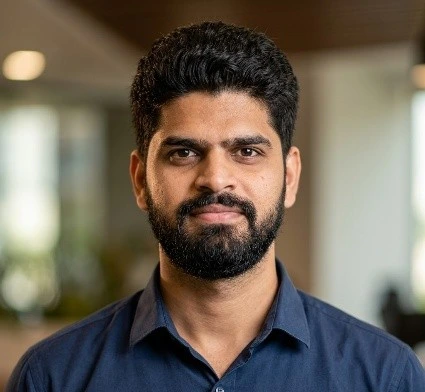
M.SC GEOINFORMATICS
National Package

One of very few universities in India offering a dedicated M.Sc. in Geoinformatics with a research centre (C3WR) attached.
Hands-on training on licensed ArcGIS, QGIS, ERDAS, and Google Earth Engine platforms from semester one.
Direct access to NASA ARSET, IIRS-ISRO, ESA, and Coursera online certification programmes.
Strong alumni network across ISRO, RMSI, WSP, NIRDPR, JDA, UAE, UK, and Qatar-based organisations.
Multiple GATE-qualified alumni — M.Sc. programme prepares students well for national-level research careers.
International exposure through student exchange and collaboration with European and Japanese universities.
Industry mentors from Wipro, WAPCOS, Geo Planet Solution, RIICO, and Airport Authority of India.
Leading global corporations























Everything you need to know about the program — admissions, curriculum, placements, and more.