Loading…
Loading…
Discover how industry-focused Computer Science Engineering programs help students gain practical skills, real-world experience, and career-ready expertise in today's technology-driven world.
Computer Science Engineering (CSE) continues to be one of the most sought-after engineering disciplines in India. With technology influencing every aspect of business and daily life, the demand for skilled software developers, AI specialists, cloud engineers, cybersecurity professionals, and data experts is growing rapidly. However, earning a degree alone is no longer enough to stand out in today's competitive job market.
Modern employers are looking for graduates who can apply their knowledge to real-world challenges, work with emerging technologies, collaborate on projects, and contribute from day one. This is where industry-oriented universities play a critical role. Unlike traditional academic models that focus heavily on theoretical learning, industry-oriented institutions emphasize practical exposure, innovation, project-based learning, internships, and skill development.
For aspiring engineers, choosing an industry-focused university can significantly improve career outcomes and prepare them for the evolving technology landscape. Let's explore the key benefits of studying Computer Science Engineering in an industry-oriented university.
Technology evolves faster than most academic textbooks. Industry-oriented universities continuously update their curriculum to align with current market demands and emerging technologies.
Instead of focusing only on traditional programming concepts, students learn modern tools, frameworks, development methodologies, cloud platforms, AI technologies, and cybersecurity practices that are actively used by leading companies worldwide.
One of the biggest advantages of industry-oriented education is hands-on learning. Students work on real-world projects, coding assignments, product development challenges, and case studies that simulate actual workplace environments.
Practical exposure enables students to understand how technology is implemented in business scenarios while improving their problem-solving and analytical thinking abilities.
By graduation, students often possess portfolios, project experience, and technical expertise that make them more attractive to recruiters.
The future of Computer Science Engineering is being shaped by technologies such as Artificial Intelligence, Machine Learning, Cloud Computing, Data Engineering, Robotics, and Cybersecurity.
Many industry-oriented institutions integrate these technologies into specialized learning pathways. For example, advanced engineering ecosystems such as AESTR are designed to provide students with exposure to future-focused technologies, innovation-driven learning, and industry-aligned skill development.
This exposure helps students stay ahead of technological trends and prepares them for careers in rapidly growing domains.
Internships play a crucial role in bridging the gap between academic learning and professional work environments. Industry-oriented universities often maintain strong relationships with companies, startups, and technology organizations.
These collaborations help students gain access to internships where they can apply classroom concepts, develop professional skills, and understand industry expectations.
Internships also improve employability by providing practical experience that many employers consider valuable during hiring decisions.
One of the primary goals of industry-oriented education is career readiness. Universities with strong industry connections often offer placement training, interview preparation, resume-building support, technical workshops, and career counseling.
Students benefit from direct interaction with recruiters, industry experts, and hiring managers, increasing their chances of securing employment in leading organizations.
This structured approach helps students transition smoothly from education to employment.
Technical knowledge alone is not sufficient for long-term career success. Employers also value communication skills, teamwork, leadership, adaptability, and critical thinking.
Industry-oriented universities often incorporate presentations, collaborative projects, hackathons, innovation challenges, and team-based activities that help students develop these essential professional competencies.
Such experiences prepare graduates to thrive in dynamic and collaborative work environments.
Modern Computer Science Engineering is no longer limited to software development. Students can pursue specialized career pathways based on their interests and industry demand.
Build expertise in machine learning models, predictive analytics, and automation.
Explore Program →Develop scalable cloud-native software solutions for modern businesses.
Explore Program →Protect systems, networks, and digital assets from evolving cyber threats.
Explore Program →Design and manage large-scale data pipelines and analytics systems.
Explore Program →Create intelligent robotic systems for industrial and real-world applications.
Explore Program →Industry-oriented universities encourage students to think beyond classroom assignments. Through research projects, innovation labs, technology competitions, startup incubation programs, and product development initiatives, students gain opportunities to explore new ideas and create impactful solutions.
Such experiences foster creativity, entrepreneurship, and technological innovation—qualities that are increasingly valued in today's digital economy.
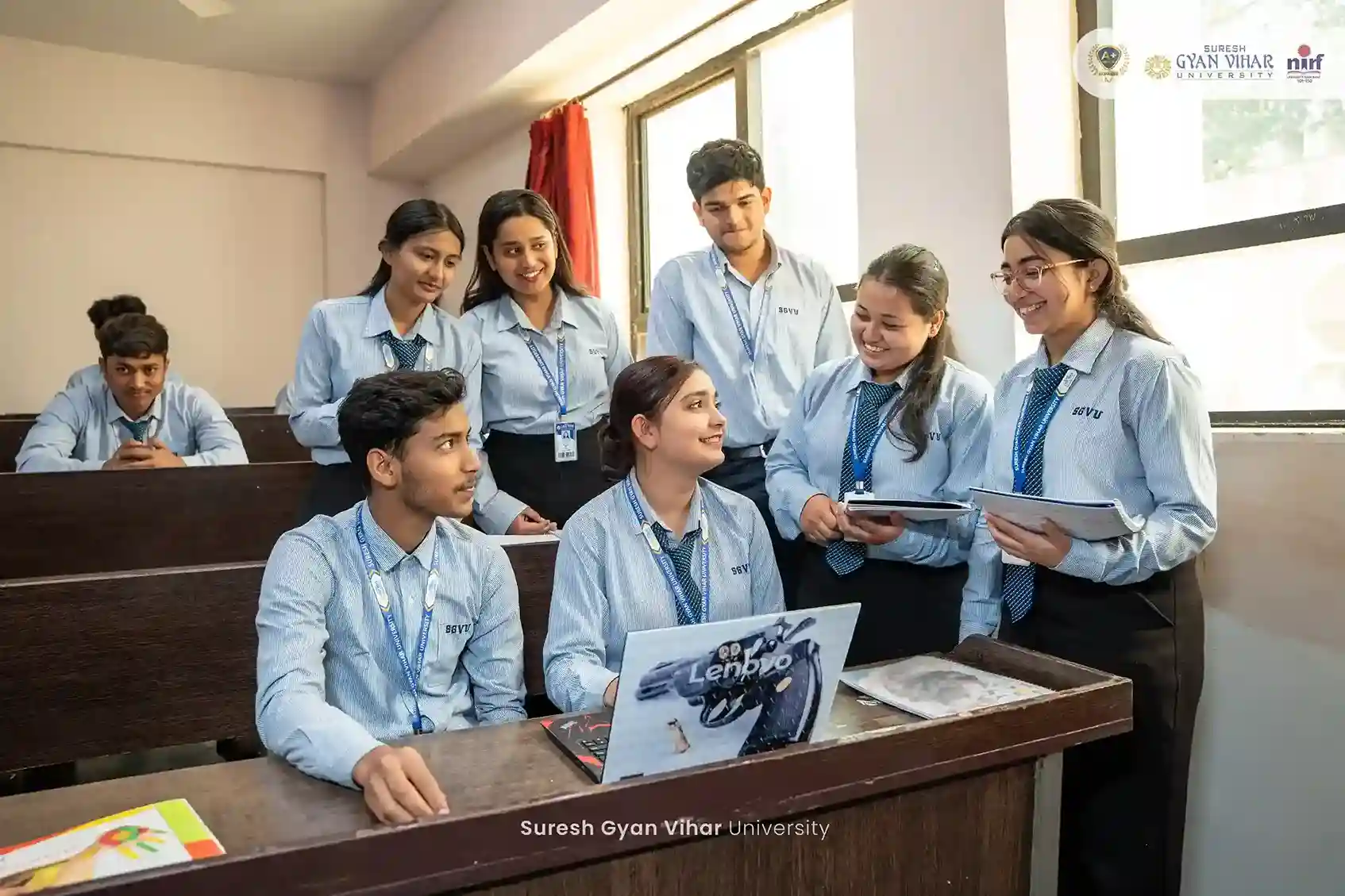
At Suresh Gyan Vihar University, students benefit from a learning environment focused on practical education, innovation, technology integration, industry exposure, and future-ready skill development.
The university's commitment to experiential learning helps students build technical expertise while developing the professional skills needed to succeed in a competitive global workforce.
Choosing an industry-oriented university for Computer Science Engineering can significantly impact a student's academic journey and career prospects. From practical learning and internship opportunities to industry exposure, emerging technologies, and specialized career pathways, the benefits extend far beyond the classroom.
As technology continues to reshape industries worldwide, students who receive industry-focused education are better positioned to adapt, innovate, and thrive in their careers. For aspiring engineers seeking a future-ready education, studying CSE in an industry-oriented university can be one of the smartest decisions they make.
SGVU offers compelling advantages.